

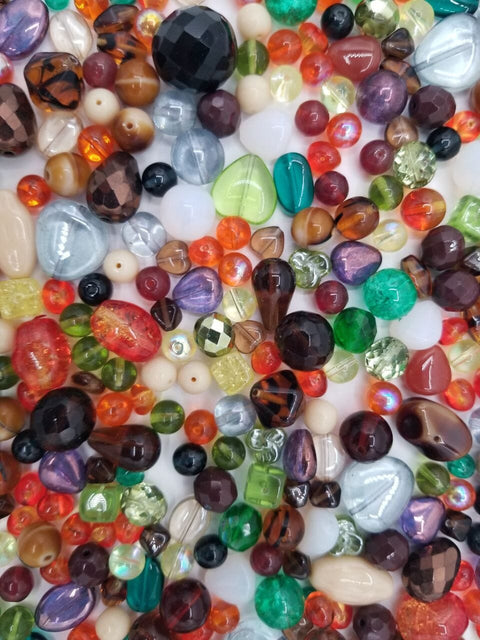
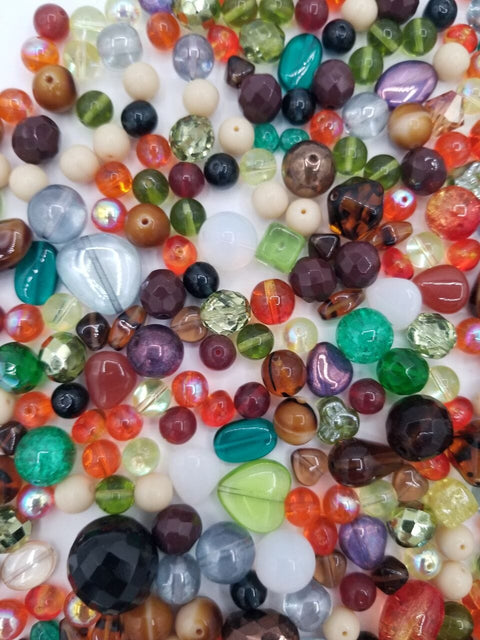
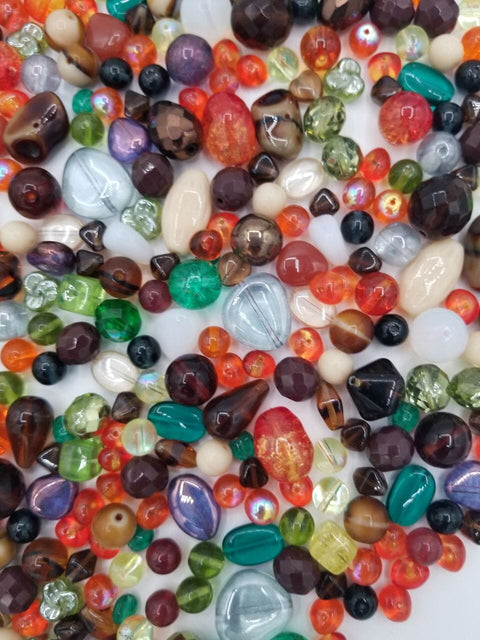
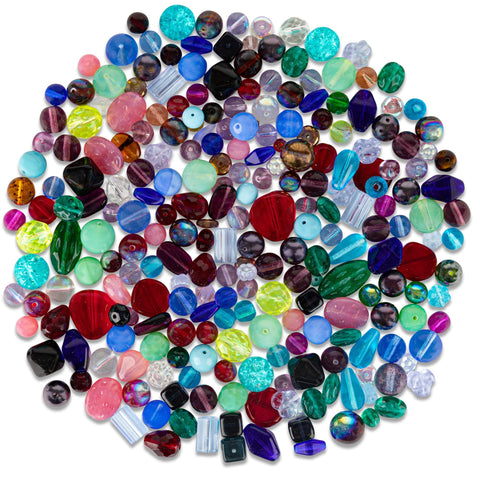
The quick answer: Czech glass beads are glass beads made in the Czech Republic, mainly in the Jablonec nad Nisou region of North Bohemia, which has been a center of bead making for centuries. The main types are pressed beads (molten glass pressed into a mold), fire-polished beads (faceted, then heated until they shine), table-cut beads, and seed beads. Jewelry makers love them for their color, shine, consistent holes and price: fire-polished beads give a soft sparkle for much less than precision-cut crystal. Every ModeBeads glass bead mix is made from them.
Where Czech glass beads come from
Bohemia, the western part of today's Czech Republic, has a long glassmaking history. The town of Jablonec nad Nisou and the nearby Jizera and Giant (Krkonoše) Mountains grew into one of the world's best-known bead-making regions. According to UNESCO, blown glass beads have been made in the area since the late eighteenth century. The handmade Christmas ornaments made from those beads in the village of Poniklá were added to UNESCO's Intangible Cultural Heritage list in 2020.
Czech bead makers exported beads around the world for use in jewelry, clothing and trade. That's why "Czech glass" or "Bohemian glass" on a label still carries weight with beaders.
How Czech glass beads are made
Pressed glass beads
A rod of glass is heated until it glows, then pressed into a mold while a needle forms the hole. The beads come out joined by a thin "skin" of extra glass, which is broken off and smoothed by tumbling. Pressing allows an enormous range of shapes: rounds, drops, daggers, leaves, flowers, rondelles, cubes and novelty shapes. A faint mold seam is sometimes visible, which is normal.
Druk beads
A druk (from the Czech word for "pressed") is the simplest pressed bead: a smooth, round glass bead. Druks are everyday workhorses for spacers, stretch bracelets and simple strands.
Fire-polished beads
Fire-polished beads start as pressed rounds. A machine grinds flat facets onto each bead, which leaves the surface dull. The beads then pass through a very hot oven until the surface just begins to melt, which gives them their glossy shine. The result is soft, light-catching sparkle at a much lower cost than precision-cut crystal beads.
Table-cut (window-cut) beads
Table-cut beads are pressed beads with a flat "window" polished onto one or two faces, so you can see into the glass and its color layers. They're popular for earrings and focal beads.
Seed beads
Seed beads are tiny, uniform beads made by drawing glass into a long hollow tube and cutting it into short pieces, which are then rounded with heat. They're sized in "aughts": the higher the number, the smaller the bead (11/0 is smaller than 6/0). Czech seed beads are made by Preciosa Ornela, among others. They're essential for bead weaving, loom work and embroidery.
Lampwork and blown beads
Some Czech beads are shaped one at a time at a torch flame (lampwork), or blown from glass tubes, like the beads used in Poniklá's Christmas ornaments. These are more artisanal and usually cost more.
Czech glass bead types at a glance
| Type | What it looks like | Best for |
|---|---|---|
| Druk (pressed round) | Smooth, round, even | Stretch bracelets, spacers, simple strands |
| Shaped pressed | Leaves, flowers, drops, daggers, cubes | Statement pieces, nature themes, earrings |
| Fire-polished | Faceted with soft, glossy sparkle | Anywhere you want sparkle: bracelets, earrings, ornaments |
| Table-cut | Flat polished "windows" on the faces | Focal beads, earrings |
| Seed beads | Tiny and uniform, sized 15/0 to 6/0 | Bead weaving, loom, fringe, embroidery |
| Lampwork / blown | One-of-a-kind, often patterned or hollow | Focal beads, heirloom ornaments |
Common finishes and what they mean
- AB (Aurora Borealis): a thin iridescent coating that flashes rainbow colors.
- Luster: a pearly, glossy surface coating.
- Picasso: a mottled, earthy finish that looks aged or stone-like.
- Matte / etched: a frosted, velvety surface with no shine.
- Metallic: a metal-look coating in gold, silver, bronze and more.
- Crackle: glass that is heated and then quickly cooled, so fine cracks form inside while the surface stays smooth. It sparkles like ice.
- Transparent, opaque and opal: how much light passes through. Opal glass is milky and glows softly.
Care tip: the glass itself lasts, but surface coatings such as metallics and some AB finishes can wear with heavy friction or harsh chemicals. Take coated pieces off before swimming or cleaning, and wipe them with a soft dry cloth.
Czech glass bead sizes
Most Czech glass beads are measured by their diameter in millimeters (mm). Seed beads use aught sizes instead. Use this chart to plan a project:
| Size | Beads per inch (approx.) | Estimated beads for a 7 in straight strand |
|---|---|---|
| 4 mm | 6 | 44 |
| 6 mm | 4 | 30 |
| 8 mm | 3 | 22 |
| 10 mm | 2.5 | 18 |
| 12 mm | 2 | 15 |
These are estimates for round beads laid end to end in a straight 7-inch line. Once a strand is closed into a loop it fits tighter than its straight length, especially with large beads, so wrap it around the wrist and test the loop before you tie. Shaped beads vary, so lay your design out first.
Which cord or wire fits?
- Stretch bracelets: 0.7–1 mm stretch cord. Many Czech pressed and fire-polished beads have holes around 1 mm, but always test a few.
- Strung necklaces: nylon-coated beading wire (0.015–0.019 in) with crimp beads.
- Wire-wrapping and ornaments: 20-gauge (0.8 mm) craft wire for structure, and 22–24 gauge for beads with tighter holes.
- Bead weaving: nylon beading thread or braided thread with a beading needle.
How to check glass bead quality (and origin)
These checks help you tell glass from plastic and good beads from poor ones. None of them can prove where a bead was made.
- Temperature and weight: glass feels cool and noticeably heavier than plastic or acrylic. That tells you it's glass, not which country it came from.
- Holes: good beads have clean, consistent holes with no flaking or sharp burrs.
- Color: the color goes through the glass or sits in a durable finish. It shouldn't rub off between your fingers.
- Facets: fire-polished facets have slightly softened, glossy edges. Precision-cut crystal has crisp, sharp facets, and plastic "facets" are molded and rounded.
- Seams: a faint mold line on pressed beads is normal. It shows the bead was pressed, but pressed glass beads are made in other countries too.
- Origin: to know a bead is Czech, you need the maker or seller to tell you. Look for the country of origin on the listing or packaging, ask the seller if it isn't there, and buy from shops that say exactly what you're getting.
Experienced beaders often say it's better to buy smaller amounts of better beads than a big bag of inconsistent ones. Uneven holes and flaking coatings make projects harder and don't last.
Fire-polished beads vs. precision-cut crystal vs. plastic
Czech makers produce both fire-polished glass beads and precision-cut crystal, so the real choice is the type of bead, not the country. Here's how the two compare with plastic:
| Fire-polished glass | Precision-cut crystal | Plastic / acrylic | |
|---|---|---|---|
| Look | Rich color, soft glossy sparkle | Sharp, brilliant sparkle | Bright but flat |
| Facets | Machine-ground, then softened by heat | Cut and polished to crisp edges | Molded |
| Feel | Cool, substantial | Cool, heavy | Light, warm |
| Durability | Excellent; coatings vary | Excellent; coatings vary | Scratches, fades |
| Price | Moderate | Highest | Lowest |
What to make with Czech glass beads
- Stretch bracelets and stacks: mix druks, fire-polished beads and one bold shaped bead.
- Suncatchers: transparent and crackle beads light up in a window.
- Christmas ornaments: thread a graded strand onto craft wire and shape it into an icicle or a small wreath.
- Bag charms and keychains: a few big beads on an eye pin and clasp.
- Earrings: table-cut and fire-polished beads make light, sparkly drops.
Czech glass bead mixes from ModeBeads
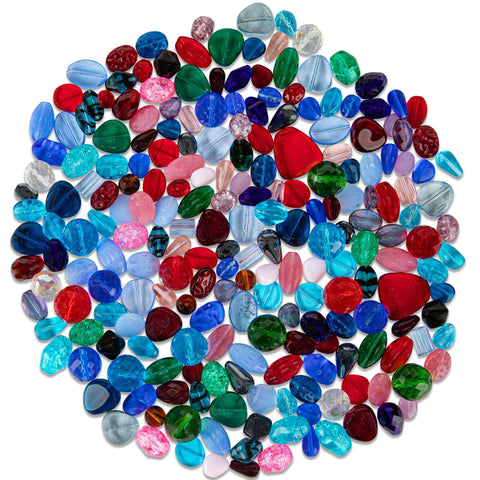
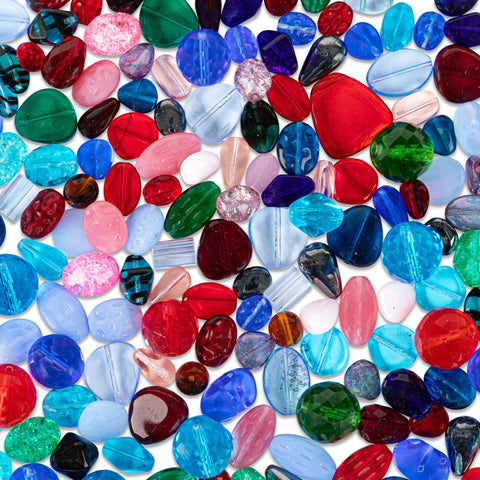
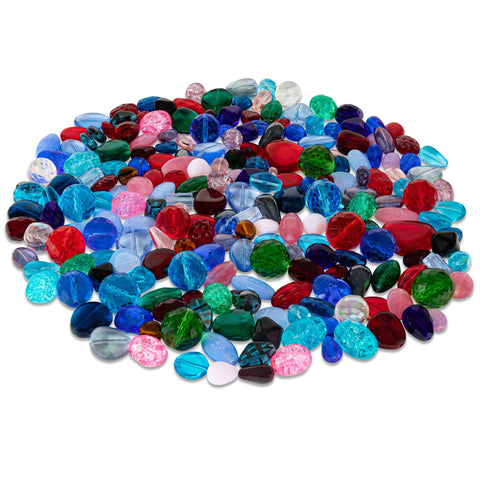
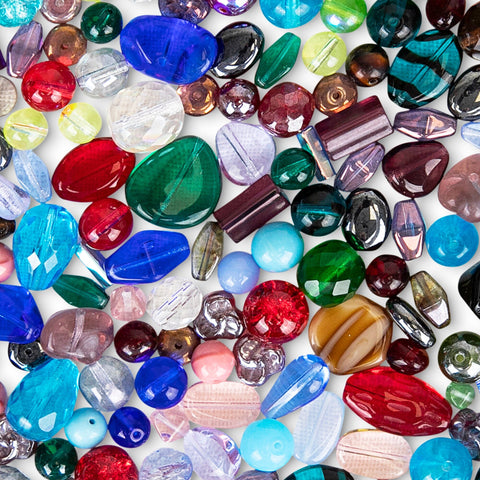
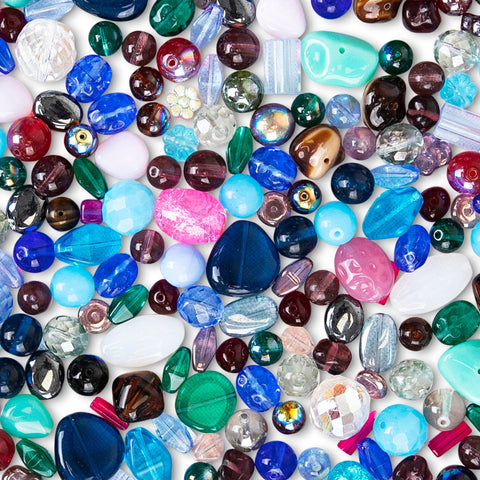
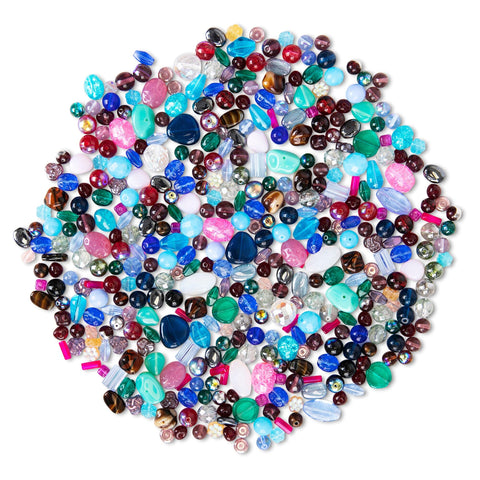
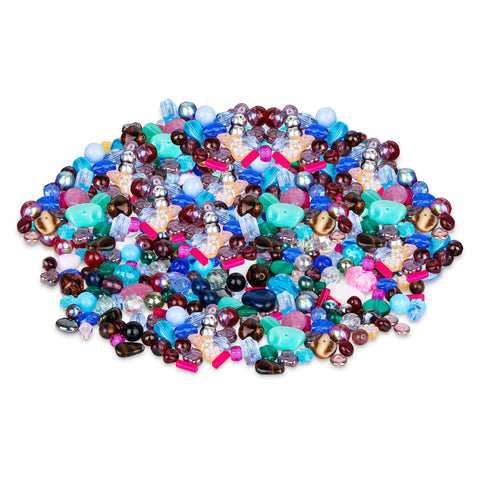
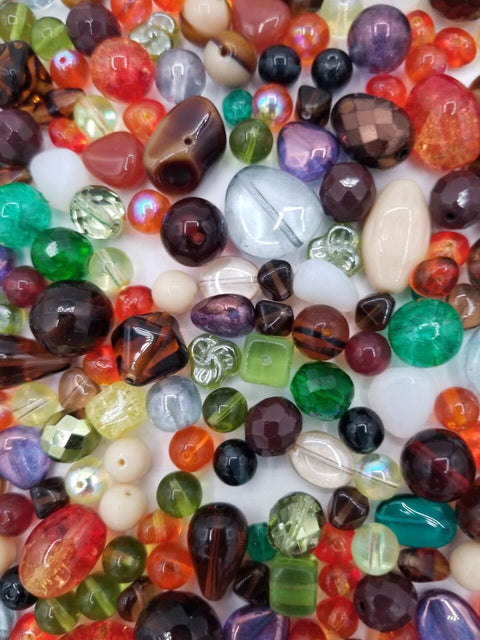
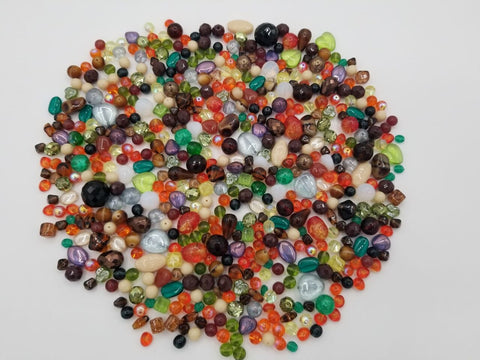
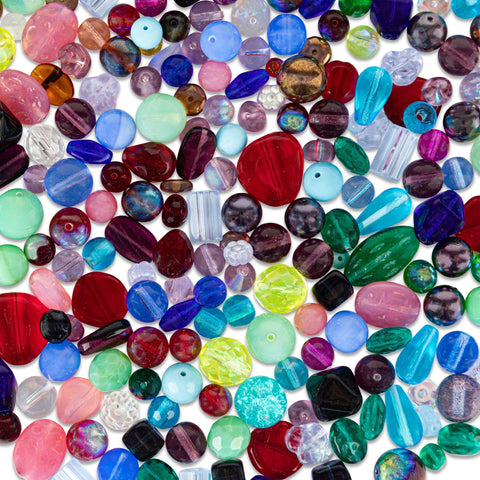
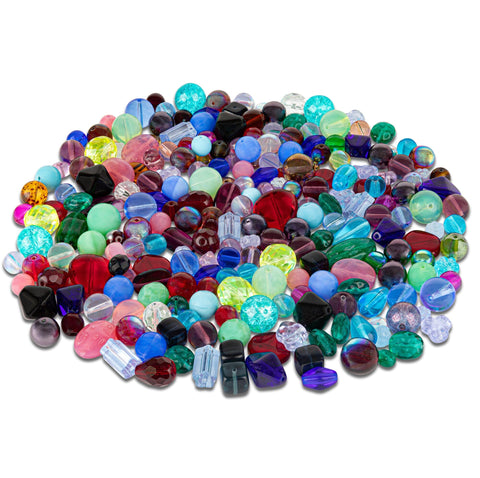
ModeBeads began over 40 years ago as a small family venture, and our mixes are made from Czech glass beads, hand-mixed for a balance of colors, shapes and sizes. A few to start with:
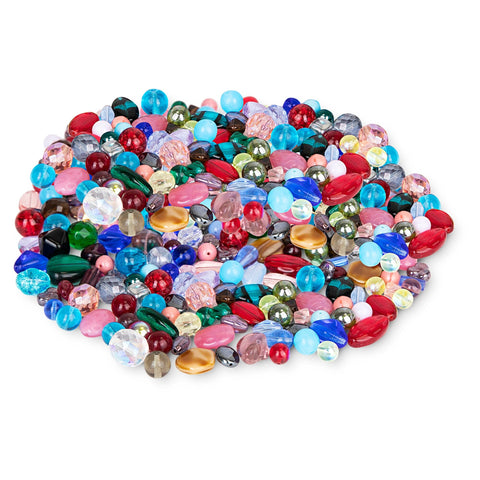
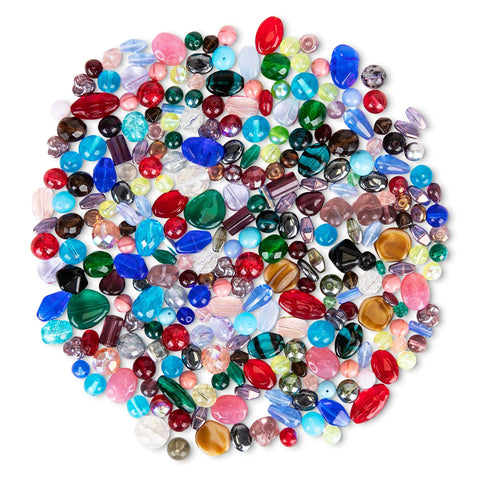
- Monthly Grab Bag: a surprise assortment of Czech glass beads, approximately 4–18 mm, in half-pound or one-pound bags.
- Arctic Mix: fire-polished Czech glass in icy blues, glacial whites and silver frost, with cracked, faceted and smooth finishes (6–18 mm).
- Urban Mix: fire-polished metallics, smoky grays and blacks with large holes for easy stringing (6–18 mm).
- Garden Mix: florals, rounds and drops in pinks, purples, greens and yellows (6–18 mm).
- 10–12 mm Mix: a cohesive size range with smooth, faceted and marbled textures.
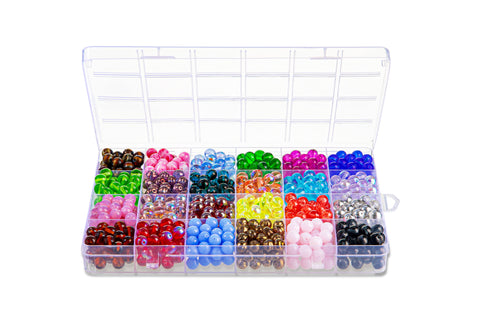
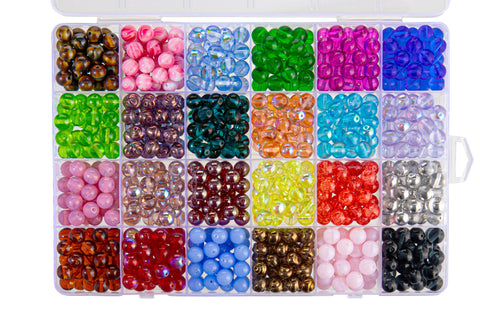
- 24-Section Organizer: 8 mm Czech glass beads in 20+ colors and finishes, already sorted.
Browse every assorted glass bead mix in All Mixtures.
FAQ
Are Czech glass beads real glass?
Yes. Czech glass beads are made of glass, not plastic or resin. That's why they feel cool and heavy and keep their color.
Where are Czech glass beads made?
In the Czech Republic, mainly in North Bohemia around Jablonec nad Nisou and the nearby Jizera and Giant Mountains.
What does "fire-polished" mean?
The bead is faceted by machine and then heated in an oven until its surface melts slightly and turns glossy. "Fire-polished" describes that heat finish, not hand polishing in a flame.
What is a druk bead?
A smooth, round pressed-glass bead. It's the most basic Czech pressed shape.
Are Czech glass beads good quality?
Czech glass beads are widely respected for consistent shapes, reliable holes and rich color. Quality still varies by maker and seller, so check the holes and finishes when your beads arrive.
Are Czech glass beads the same as seed beads?
No. Seed beads are one type of Czech glass bead: tiny, uniform and used mainly for weaving. Pressed and fire-polished beads are larger and used mostly for stringing and wire work.
Can Czech glass beads get wet?
The glass is fine with water. Surface coatings (metallic, some AB and luster finishes) last longer if you keep them away from chlorine, perfume and harsh cleaners.
Show us what you make
Made something with Czech glass? Share it in our Customer Creations gallery. We feature our favorites and love seeing every color combination.
Want a new mix to explore?
- Try a 1 lb Grab Bag: one surprise bag of assorted glass beads, about 4–18 mm, as a one-time purchase ($14.95).
- Get a bag every month and save 10%: a new 1 lb surprise mix each month ($13.46) through our Bead Club. Skip or cancel anytime.
Happy making,
The ModeBeads Team


Comments (0)
There are no comments for this article. Be the first one to leave a message!